The aerospace, energy, and metallurgical industries use high-strength materials. This raises the question: what metal is heat resistant, according to industry experts? First and foremost, it is one that has a high melting point and creep resistance.
However, it is impossible to say definitively what is the most heat resistant metal. After all, a high-performance material that performs well in a vacuum or in air may lose its service life due to oxidation. Operating conditions and service time are determining factors.
A heat-resistant alloy must maintain its strength, hardness, integrity, and performance at high temperatures. Its key property is heat resistance. Some of the best heat resistant metals (tungsten and molybdenum) oxidize and deteriorate rapidly in air. Therefore, maintaining structural integrity also depends on other parameters:
Thus, heat resistance is a complex characteristic. Metals that can withstand extreme heat must not simply resist melting but also retain all their functional properties under specific operating conditions.
The highest melting points are found among refractory metals and alloys. They are considered the benchmark for heat resistance, although carbon impurities can affect their ductility.
Tungsten (W) is the most heat resistant metal, with a melting point of 3422°C. However, its disadvantages include high brittleness at room temperature and extremely low resistance to oxidation in air during heating. In an oxygen-containing environment, it begins to deteriorate at temperatures as low as 600-700°C, so its application is justified only in a vacuum or inert atmosphere.
Rhenium (Re) melts at 3186°C and retains exceptional stability. It is not found in nature in pure form and is one of the most expensive metals. It is valuable as an alloying element. Adding rhenium increases the heat resistance and creep resistance of nickel-based superalloys, which are used to make turbine components.
Tantalum (Ta) is distinguished by its unique resistance to corrosion. Because it forms a dense oxide film on the surface, it can withstand aggressive acidic environments. Thanks to this property, as well as its biocompatibility, tantalum is suitable for manufacturing medical implants and electronic components. Its melting point is 3017°C.
Molybdenum (Mo) is an affordable high heat resistant metal that melts at 2623°C. It is used as a base for structural alloys due to its strength, thermal conductivity, and workability. Its alloys (TZM) are used for components of industrial furnaces, dies, and nozzles. The disadvantage is that molybdenum oxidizes in air under high-temperature conditions, so it requires protective coatings or an inert atmosphere. Carbide-dispersed composites are used to increase its strength.
Niobium (Nb), with a melting point of 2477°C, completes the heat resistant metals list. It has the lowest density among them. Therefore, niobium-based alloys, including C-103, are used in rocket engines and spacecraft (in the aerospace industry, every kilogram is worth its weight in gold). They resist high temperatures and have good ductility.
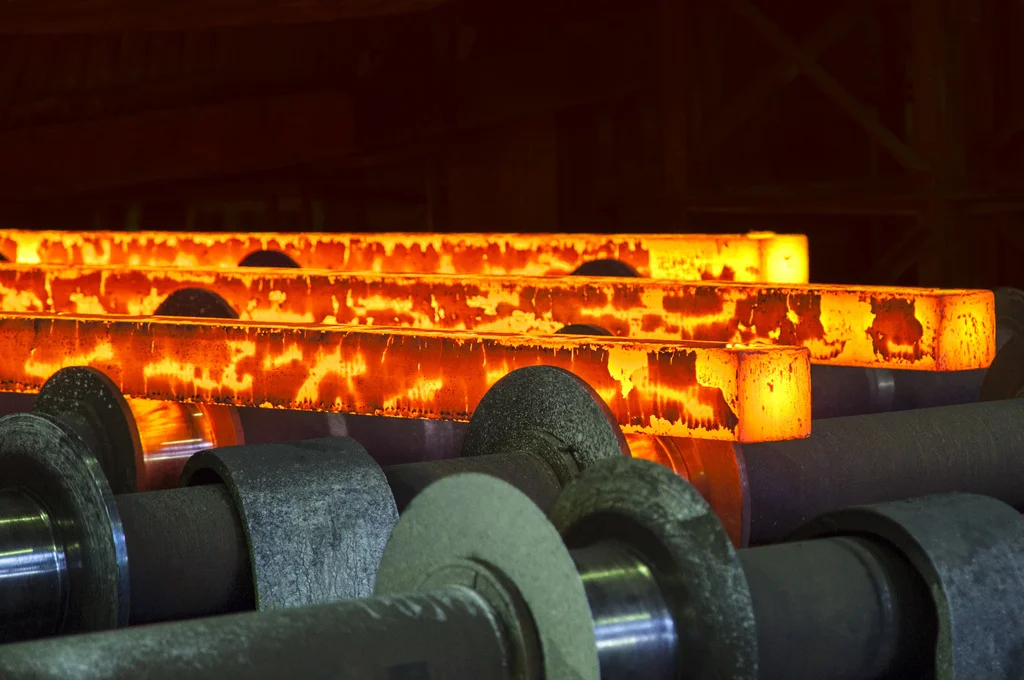
The best heat resistant metal is not always pure. Specially engineered alloys make it possible to combine strength, oxidation resistance, corrosion protection, manufacturability, and often an acceptable cost. Growing demand for such materials creates a need for new solutions.
They retain their strength up to 1100°C due to a protective oxide film (chromium and aluminum) and strengthening phases (Ni3Al). Despite having a lower melting point than tungsten, they are better suited for turbine blades. The reason is their virtually ideal resistance to oxidation.
They have excellent resistance to hot corrosion, especially when exposed to sulfur. Operating temperatures are comparable to those of nickel alloys, but they are more expensive and more difficult to process. They are used in turbines and components that operate under harsh conditions.
Lightweight intermetallics have low density and high strength at temperatures of 800-900°C. Therefore, they are suitable for making virtually any aerospace or automotive component. Their disadvantages include brittleness and technical difficulties. However, modern research is addressing these issues through alloying (for example, with niobium) and new processing technologies.
For a heat exchanger or exhaust system, use heat-resistant stainless steel of the austenitic grade. It resists temperatures of up to 1150°C, is stable against oxidation, and has sufficient strength. In addition, it is significantly cheaper compared with a superalloy.
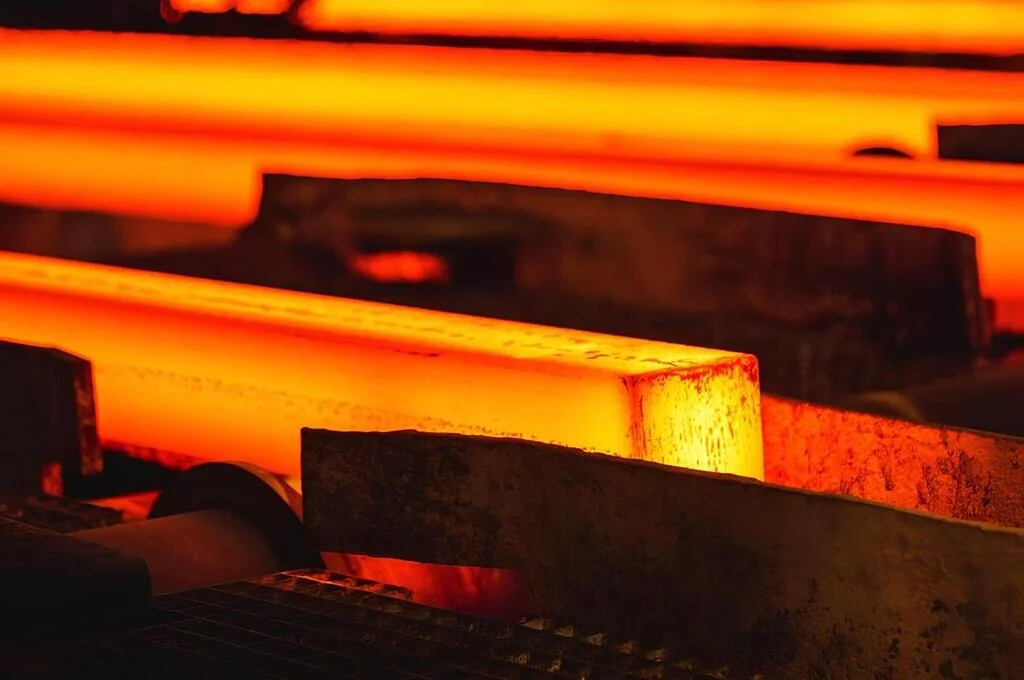
What metal can withstand the most heat? The answer is not obvious. The operating temperature is always lower than the melting point, and for refractory metals, it is limited by oxidation. Therefore, both indicators are provided in the table below.
| Metal | Approximate maximum melting point | Approximate operating temperature |
|---|---|---|
| Tungsten | 3422 °C | up to ~600 °C |
| Rhenium | 3186 °C | up to ~1000 °C |
| Tantalum | 3017 °C | up to ~1200 °C |
| Molybdenum | 2623 °C | up to ~700 °C |
| Niobium | 2477 °C | up to ~900 °C |
The table makes the trade-off obvious: the more superior the melt point, the poorer their resistance to oxidation. An exception is tantalum, particularly because it has a protective oxide film.
The unique properties of the most heat-resistant alloy or metal make them indispensable in many industries. Each industry has its own material requirements, which determine the choice of a specific product.
Any engine or rocket part operates at extreme temperatures (up to 1500°C), under high mechanical loads, and in aggressive gases.
The key factors in the selection are the strength-to-weight ratio, creep resistance, and thermal fatigue resistance. New alloys (for example, PM2000, MA956) make it possible to increase engine efficiency.
Gas turbines, thermal power plants, nuclear reactors, and furnaces (metallurgy, glassmaking, and the cement industry) require long-term operation without deformation at temperatures of up to 1200°C.
The main characteristics are resistance to oxidation and creep, as well as the thermal stability of the structure. This ensures equipment service life of 50,000+ hours and supports uninterrupted operation.
The most heat-resistant materials (including metals) are used for equipment that operates in a vacuum or in a clean-gas environment (argon, hydrogen, nitrogen).
The key properties are purity (>99.9%) and compatibility with thin-film deposition processes (CVD, PVD). This allows the equipment to maintain stable parameters throughout its service life.
Choosing the highest temperature metal is a search for a compromise among many parameters. To avoid overlooking anything important, follow this algorithm:
Difficult to select the strongest heat resistant metal for your project? Aspersteel is a steel supplier offering a large number of products. Contact our expert for assistance.
Titanium aluminides are the lightest among heat-resistant alloys, withstand temperatures of up to 900°C, and have the highest specific strength due to their low density.
In terms of melting point, the high heat metal tungsten has the highest melting point (3422°C). However, in an oxidizing environment, a nickel superalloy is more resistant and does not deteriorate at temperatures of ~1400°C.
The melting point is the physical limit at which a material transitions into a liquid. The maximum operating temperature is the practical limit at which the material still retains its strength and resistance to the environment, and it is always lower due to creep, oxidation, or stress (constant mechanical loading).
Above 1100°C, molybdenum and niobium perform well. At 800-1100°C, nickel-based superalloys are used. Modern advanced alloys, such as refractory high-entropy alloys (RHEAs), can include refractory elements for operation at temperatures of up to 1600°C.
Differences Between Ferrous and Non-Ferrous Metals
The choice of alloy is critical for the integrity of construction. Manufacturers focuse attention on the chemical inertness and weight of materials already at the production stage. This provides a clear description and definition of the differences between ferrous and non-ferrous metals. Humanity has gone from using ores as a mineral resource to the modern […]