
Need a consultation?
Leave your contact details and we will contact you soon.
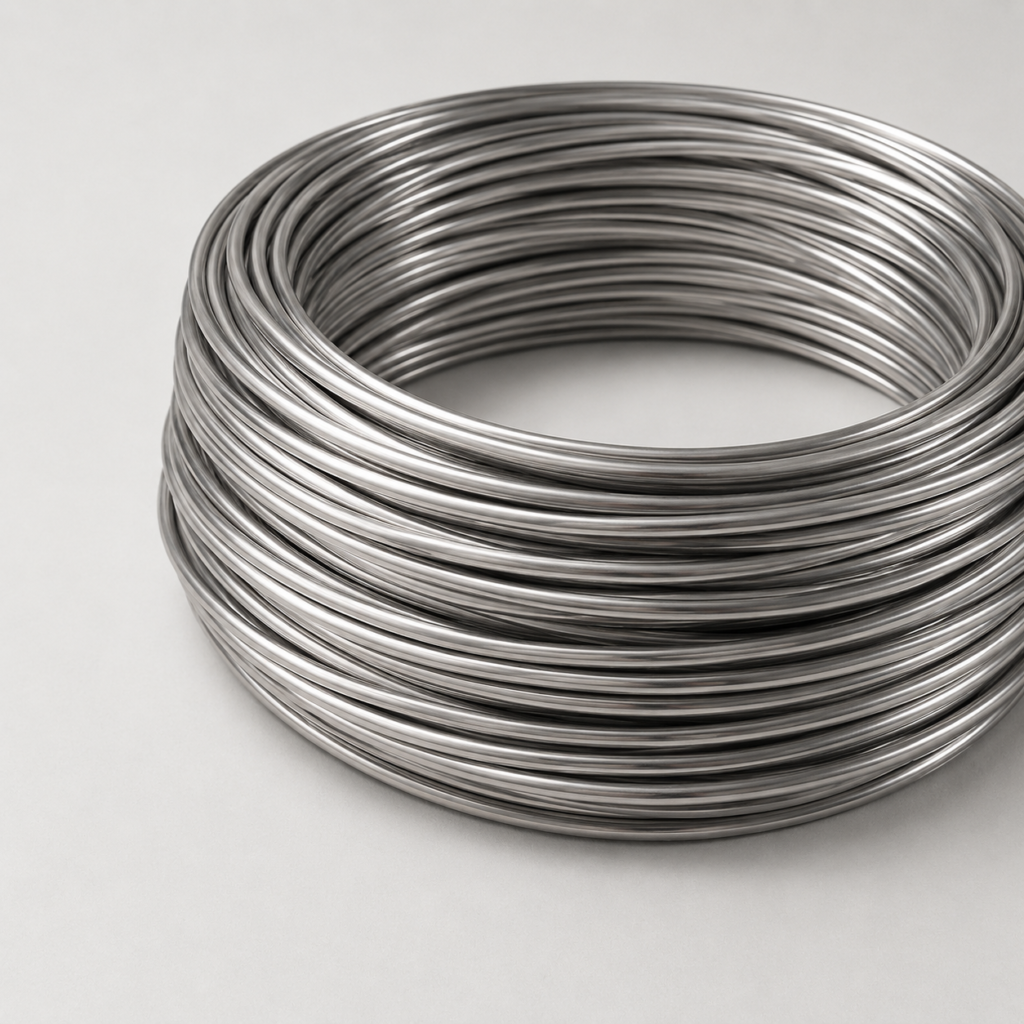
Prestressing Steel Wire EN 10138-2: Technical Characteristics, Applications, and Features Prestressing steel wire according to EN 10138-2 is used for prestressed concrete structures and precast concrete products. It is manufactured from high-strength steel by cold drawing followed by stress relieving. The wire can have a plain or indented surface and is supplied in coils or […]
Prestressing steel wire according to EN 10138-2 is used for prestressed concrete structures and precast concrete products. It is manufactured from high-strength steel by cold drawing followed by stress relieving. The wire can have a plain or indented surface and is supplied in coils or bundles of cut lengths.
Prestressing steel wire is available in different diameters and strength classes. The main characteristics include:
The exact combination of diameter and tensile strength depends on the selected steel grade. For example, EN 10138-2 product families include Y1860C, Y1770C, Y1670C and Y1570C wires with different nominal diameter ranges.
Prestressing steel wire is used in the manufacture of structures and products where prestressing is required. Typical applications include:
The wire is particularly suitable for precast production, where consistent mechanical properties and controlled dimensions are important.
The main characteristic of EN 10138-2 prestressing wire is its high tensile strength. The wire is produced in a stress-relieved condition, which provides controlled mechanical properties for use in prestressed concrete.
Depending on the product specification, the wire can be supplied with a plain or indented surface. Indented wire is used where the surface profile is required to improve interaction with the surrounding concrete.
The cold-drawn manufacturing process provides the required strength and dimensional consistency. The stress-relieved condition helps reduce unwanted changes in the material during service.
For applications requiring additional corrosion protection, prestressing wire can also be supplied with a suitable protective coating according to the applicable product specification.
Common steel grades for prestressing wire according to EN 10138-2 include:
| Steel Grade | Steel Number | Nominal Tensile Strength |
|---|---|---|
| Y1570C | 1.1350 | 1570 MPa |
| Y1670C | 1.1351 | 1670 MPa |
| Y1770C | 1.1352 | 1770 MPa |
| Y1860C | 1.1353 | 1860 MPa |
The designation combines the EN 10138-2 part number, the letter Y for prestressing steel, the nominal tensile strength, and the letter C for cold-drawn wire. An additional I can be used to identify indented wire. For example, EN 10138-2-Y1770C-5.0-I identifies indented Y1770C wire with a nominal diameter of 5.0 mm.
The mechanical properties depend on the selected grade and nominal diameter. Typical values specified for prestressing wire include:
| Property | Typical / Specified Value |
|---|---|
| Tensile strength | 1570-1860 MPa, depending on grade |
| Modulus of elasticity | approximately 205 GPa |
| Minimum elongation at maximum force | 3.5% |
| Surface | Plain or indented |
The 0.1% proof force is also specified according to the selected steel grade and wire diameter, so it should not be presented as one universal yield-strength value for all EN 10138-2 wires. Manufacturer data show different proof-force values for individual diameter and strength combinations.
The standard covers a range of nominal diameters depending on the steel grade. Examples include:
Not every diameter is available in every strength class. The applicable diameter and strength combination should therefore be checked against the product specification.
Prestressing steel wire according to EN 10138-2 is available in two main surface configurations:
Plain wire has a smooth surface, while indented wire has a formed surface profile for applications where improved interaction with concrete is required.
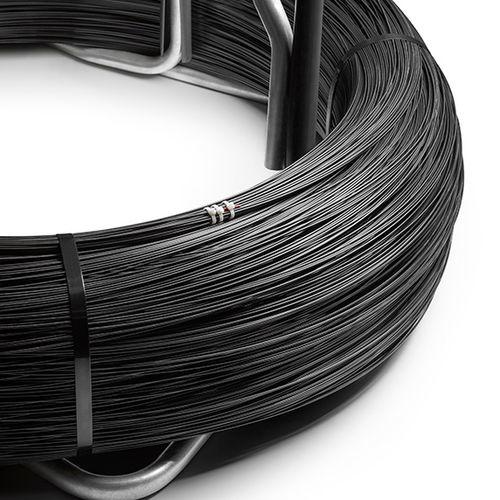
Depending on the product and delivery requirements, the wire can be supplied in coils or bundles of cut lengths. Coils are produced with dimensions suitable for maintaining the required condition of the wire after decoiling.
The production of prestressing wire includes cold drawing, which reduces the cross-sectional area and increases the strength of the steel. The wire is then stress relieved to obtain the required mechanical properties and stability.
The production process allows manufacturers to achieve high tensile strength while maintaining the dimensional accuracy required for prestressed concrete applications.
EN 10138-2 prestressing steel wire combines high tensile strength with controlled mechanical properties. The range of steel grades and diameters makes it possible to select a product according to the requirements of a particular concrete structure.
The choice between plain and indented wire depends on the construction method and the required interaction between the wire and concrete. The appropriate tensile strength and diameter should be selected based on the design requirements and applicable technical specifications.
Prestressing steel wire EN 10138-2 is a high-strength cold-drawn steel product used for prestressed concrete structures, precast elements, railway sleepers, bridges, masts, pressure pipes and other applications. The product is available in several strength classes, diameters and surface configurations, allowing it to be matched to different construction requirements.
There are no reviews yet.